Biotypes of the psychotic syndrome
Biomarkers
Schizophrenia/Psychotic disorder
Identification of biotypes of psychotic syndrome to advance towards more personalized diagnoses and treatments.
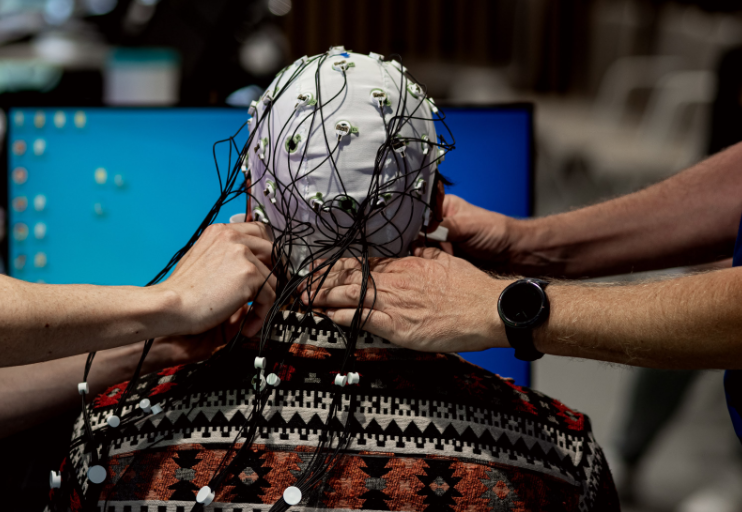
The project aims to address the problem of identifying the causes of serious psychiatric disorders, such as schizophrenia and bipolar disorder , due to the heterogeneity of patients within each diagnosis. “Definition of biotypes within the psychotic syndrome based on cognitive performance and cortical inhibitory activity” is a consortium with the Fundación Institut d’Estudis de Ciencias de la Salut de Castilla y León , specifically with the team of Vicente Molina at the Hospital Clínic Universitario de Valladolid, which will last 3 years and is funded by the Fundación LaMarató of TV3. The heterogeneity of patients also leads to non-personalized treatment, making it only partially effective. Therefore, the project proposes to define biotypes in the psychotic syndrome that serve to improve diagnostic practices and treatments by personalizing them based on pathophysiological factors.
In fact, over the last decade, a subgroup of patients with schizophrenia and bipolar disorders has been reported, characterized by very poor cognitive performance, anatomical deficits, and a hyperactive brain that cannot adequately modulate its activity during cognitive tasks. However, more research is needed. Consequently, the project aims to expand the sample that allowed the aforementioned characterization to improve it and, in particular, to add a direct study of cortical inhibitory function using transcranial magnetic stimulation (TMS) together with electroencephalography (EEG, together TMS-EEG), as a possible target for personalized treatments. In addition, cognitive assessments ( an oddball auditory task) will serve as a basis for the search for biotypes, collecting clinical data with EEG and magnetic resonance imaging (NMR, structural and diffusion). By processing the aforementioned data, we expect to obtain, at least, a biotype characterized by severe cognitive deficit, gray matter deficit, basal cortical hyperactivity, and GABA transmission deficits, and this group would show a selective response to clozapine.
Group IP: Miguel Angel Mañanas
Institution: Polytechnic University of Catalonia
Team website here. Group website here.
For more information contact us .
Artículos relacionados

Trials in Epilepsy pharmacoresistance