Mental health, gender and aging: challenges and inequalities
With Montserrat Celdrán, Psychogerontologist, expert in Psychology of Aging
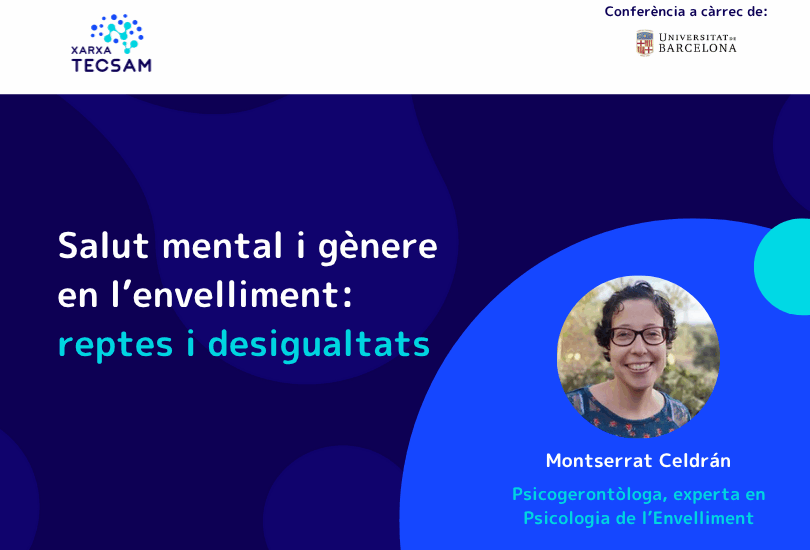
In December’s B&L, we focused on mental health during aging and the gender inequalities that condition it.
Montserrat Celdrán Castro , Psychogerontologist and expert in Psychology of Aging (University of Barcelona), has addressed how aging has impacted mental health and how gender inequalities have influenced this process.
Some relevant data:
-
Women live longer than men, but in worse health. The goal should be to live the same number of years with quality of life.
-
Illiteracy affects 6% of elderly women, compared to 3% of elderly men.
-
The socioeconomic and gender gap conditions mental health: psychosocial factors, health behaviors and socioeconomic aspects throughout life generate significant differences.
-
From the age of 80, women present more chronic pathologies, pain, depression and mobility limitations, while men have a higher suicide rate (86%).
-
Older women with partners in poor health or low educational levels see their own aging as conditioned.
-
The invisibility of older women is worrying: despite their active participation in caring for grandchildren, dependent relatives and volunteering, their voices are often not heard in decision-making bodies and their contribution is little recognized.
The study carried out by the University of Barcelona with Salut Mental Catalunya has shown that women have worse subjective health, more anxiety about aging, lower psychological well-being and a greater burden of care, which also generates more loneliness.
The Breakfast & Learn was a very enriching session, which allowed us to reflect on mental health, aging and the gender perspective , highlighting the need for empowerment, education and health programs that strengthen the quality of life of older women.