Communication and mental health: transforming stigma into respectful narrative
With Maria Lomascolo: social psychologist and head of mental health and stigma care projects at Obertament.
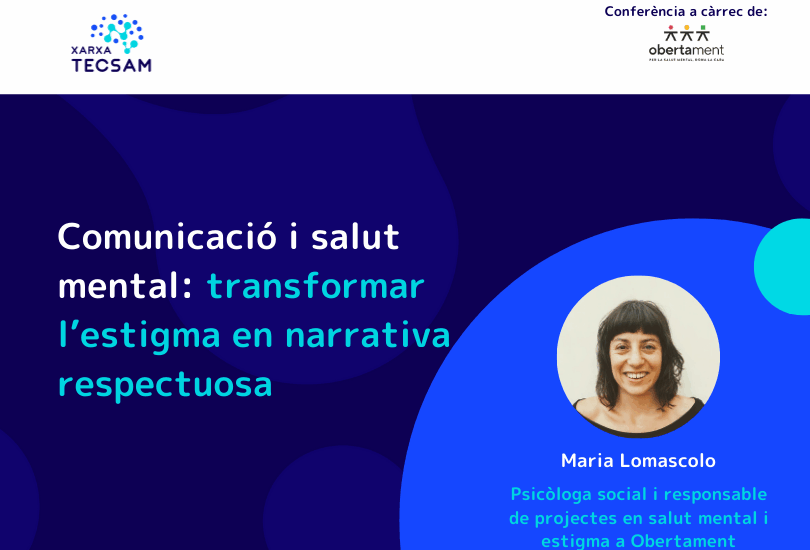
At the January Breakfast & Learn on Communication and Mental Health, participants reflected with Maria Lomascolo , social psychologist and head of mental health and stigma care projects at Obertament , on how the way we communicate can influence the perception of mental health and respect for people’s rights.
During the session, it was highlighted how the use of words such as “risk monitoring”, “seriously ill patients” or “mentally ill” can dehumanize people and reduce their experience to a diagnosis or a risk. Practical examples were presented in artificial intelligence projects to anticipate mental health needs, as well as in institutional communication and scientific dissemination.
Attendees also discussed the importance of transforming narratives of control and alarm into narratives of support, accompaniment and inclusion. It was highlighted how narratives, images and even silences can transmit stigma , while active, respectful and people-centered language helps to generate trust and make the voice of those experiencing the experience visible.
The organizers stressed that communicating is not just about informing, but also about an ethical responsibility. The way we talk about mental health can facilitate recovery, break down social barriers, and ensure that research and innovation are truly responsible.